Lowering carbon emissions in pharma cold-chain logistics has become a top priority for global pharmaceutical manufacturers, 3PLs, forwarders, and the wider healthcare supply chain. As companies publish more detailed ESG reports and expand their Scope 3 emissions monitoring. Even seemingly small operational choices—such as the weight of your thermal pallet covers—now play an unexpectedly large role in carbon reduction strategies. Lightweight thermal pallet covers, especially PCM-based innovations like Polarap from TLX Cargo, are emerging as one of the simplest, fastest, and most cost-effective ways to reduce emissions without compromising temperature stability in transit.
At the same time, the shift toward sustainable cold-chain packaging is happening at the same time as global air freight costs remain high, fuel prices fluctuate, and regulators demand higher environmental accountability. As a result, pharma logistics managers are under pressure to reduce the weight of every component that moves through their network. However, many think immediately of packaging materials, reefer equipment, or dry-ice alternatives. The truth is that thermal blankets for pallets—when designed using ultra-light, high-performance PCM materials—deliver outsized carbon savings compared to their size and cost.
Therefore, this article explores why cover weight matters more than ever and how Polarap’s lightweight PCM structure helps reduce carbon emissions. And what this means for meeting aggressive ESG targets across global pharma supply chains.
Every kilogram added to an air-freight shipment increases fuel consumption and emissions. On a typical pharma corridor—say, Brussels to Chicago or Basel to Singapore—air freight moves by the kg, and even small weight reductions accumulate into meaningful carbon savings across thousands of annual shipments.
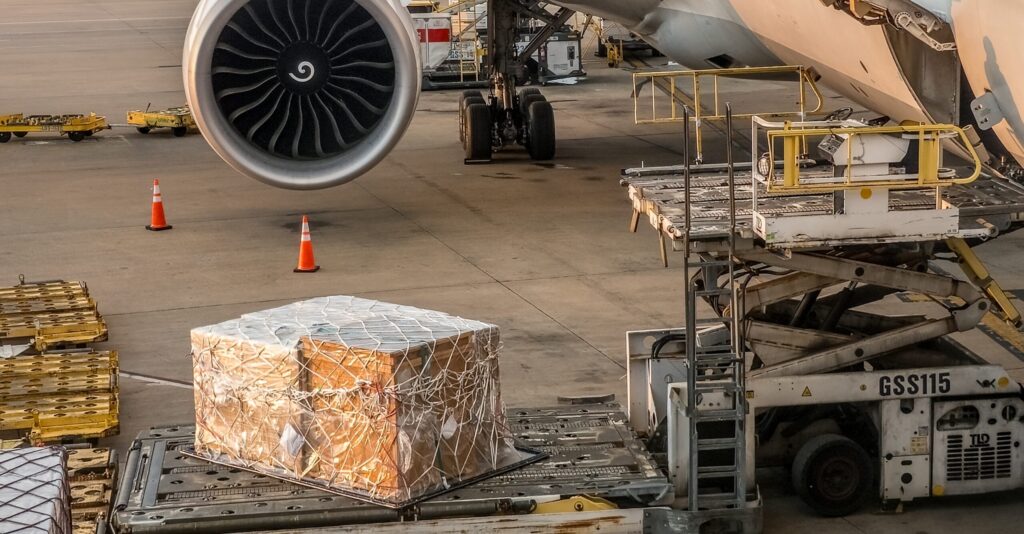
Commercial air cargo emissions calculations typically show that removing just 1 kg across a yearly programme can save hundreds of kilograms of CO₂ over the year. When logistics teams deploy lighter thermal blanket pallet covers. The weight reduction applies across every pallet, every lane, and every shipment. Multiply that across the global footprint of a pharmaceutical manufacturer moving high-volume biologics, vaccines, and APIs, and the carbon savings become substantial.
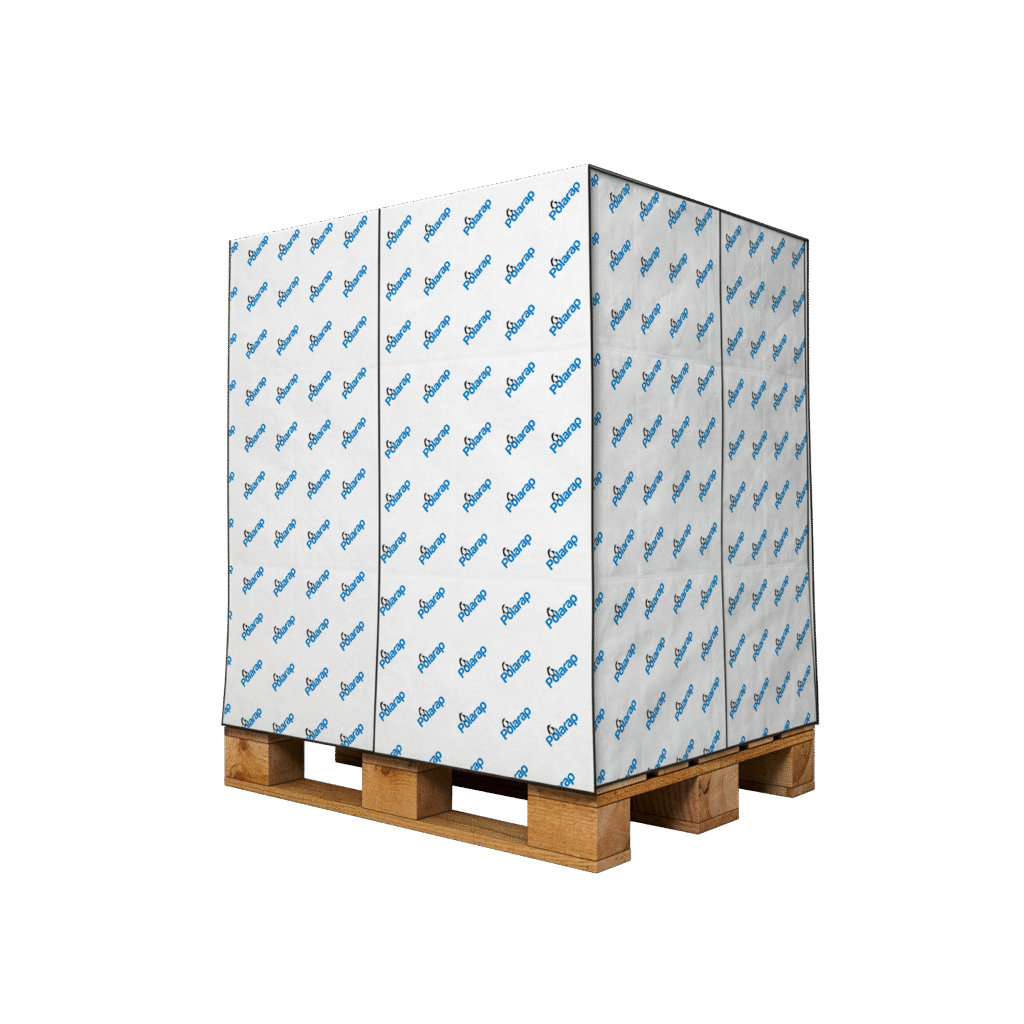
Polarap’s lightweight PCM construction—made possible through its thin 2mm structure and advanced phase-change fibres—directly reduces the fuel required for transport. Traditional thermal cargo blankets often use bulky foam cover or multi-layer heavy composites. These can weigh significantly more and increase the load cost every time they are used.
Because Polarap is optimised for weight efficiency, it delivers the same (or higher) thermal performance with far lower environmental impact. More importantly, this weight reduction comes without compromising the essential functions needed for strict time-temperature compliance.
Polarap’s engineering is built around high-density, ultra-thin PCM fibres that allow the cover to maintain strong thermal resistance without relying on thick, heavy cover. This design is basically different from conventional thermal pallet covers, which often use mass as their primary cover mechanism.
The environmental advantage is twofold:
1. Less fuel burn during transport.
The lighter the pallet load, the less energy required to lift it into the air or move it across multimodal networks. Even in ocean and road freight, where fuel consumption is not as sensitive as air cargo, lower weight still reduces emissions over the journey.
2. Lower carbon footprint in manufacturing and handling.
A lighter design means fewer raw materials and lower included carbon. It also simplifies manual handling and loading, reducing warehouse-level energy and labour intensity.
For pharma manufacturers, documenting the carbon footprint of their packaging and distribution systems. Polarap’s weight efficiency delivers tangible, measurable benefits that can be reported in annual long-term eco benefit statements.
More information about Polarap’s lightweight PCM system can be found at:
https://tlxcargo.com/products/tlx-polarap-pcm-protection/
Weight reduction is only part of the emissions story. Polarap’s 1-hour fast conditioning delivers another major carbon-saving advantage. Traditional thermal covers often require 8–24 hours of pre-conditioning in temperature-controlled rooms. These cold rooms consume enormous amounts of electricity, typically running continuously at -20°C, +2–8°C, or CRT ranges.
With Polarap, the cover achieves full thermal readiness in just one hour. Dramatically reducing the time spent in energy-intensive conditioning environments. This cuts electrical demand and lowers the facility’s carbon footprint—an increasingly scrutinised part of Scope 2 and Scope 3 reporting.
Energy managers and sustainability teams are now prioritising operational changes that reduce cold-room utilisation. Switching from slow-conditioning thermal covers to fast-conditioning PCM-based solutions is one of the simplest adjustments with the largest measurable carbon impact.
Pharmaceutical companies are under growing pressure from investors, regulators, and internal governance to reduce emissions across their full supply chain. This includes:
Thermal pallet covers fall into Scope 3, and because they move in high volumes across global shipping lanes. They represent a non-trivial source of emissions reduction potential.
Lightweight thermal cargo blankets like Polarap support ESG goals in three key ways:
No operational changes required. Not a lane change. No infrastructure investments.
Shorter conditioning time = lower electrical usage = lower Scope 2 emissions.
Polarap’s low weight and improved materials reduce embodied carbon and simplify recycling.
These improvements can be tracked, measured, and published in ESG disclosures—something sustainability teams increasingly need from every packaging vendor.
Beyond direct carbon reductions, changing to lightweight PCM covers generates secondary efficiencies that further support sustainability goals. These include:
While these may not be the headline metrics, they still contribute to overall resource efficiency and lower operational emissions.

The pharmaceutical industry is evolving quickly. Sustainability is no longer separate from performance—it is part of the performance requirement. Companies that adopt lightweight thermal covers position themselves for:
As modal shifts, stricter sustainability regulations, and Scope 3 reporting requirements expand. Lightweight PCM solutions like Polarap will become essential tools for low-carbon pharma logistics.
More information and product details:
https://tlxcargo.com/